
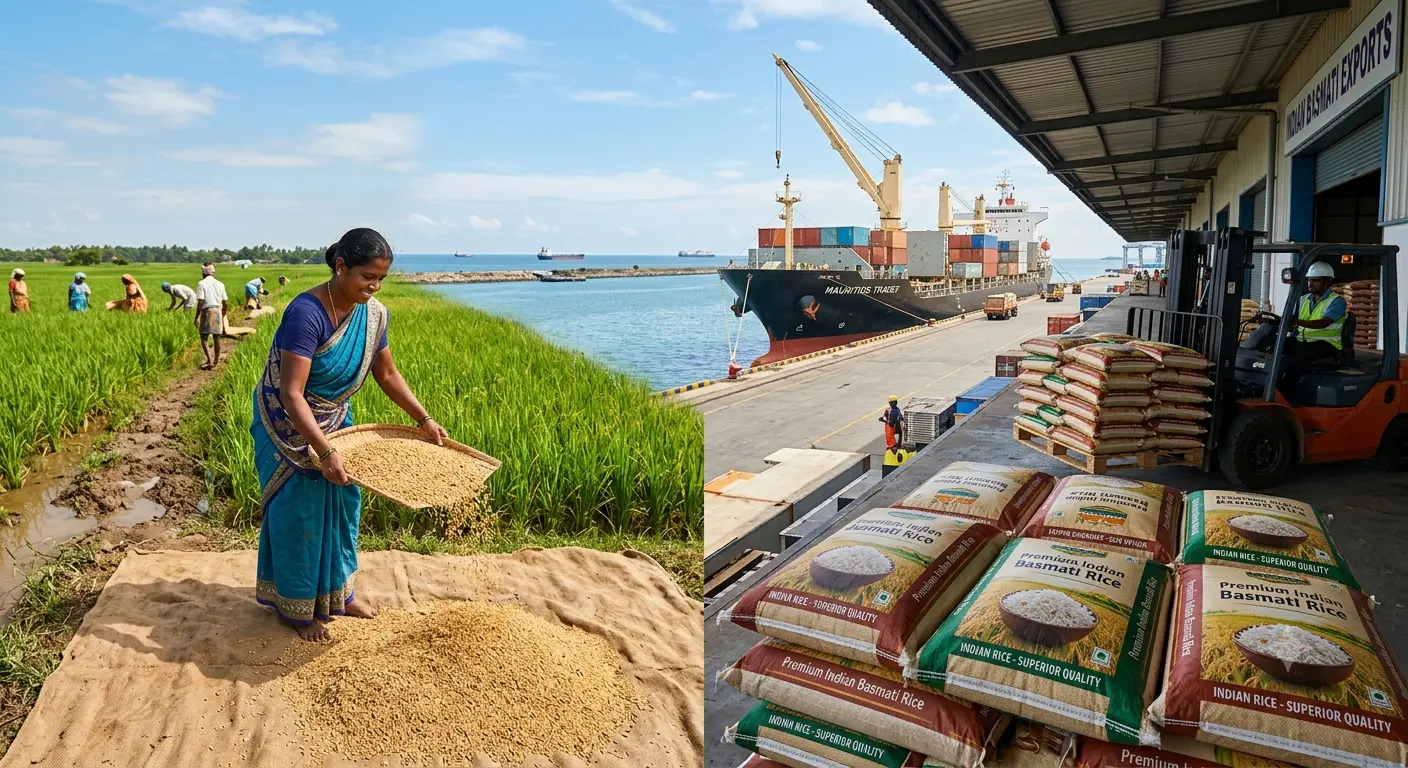
If you import rice into Mauritius, you already know the real headache isn’t finding a supplier — it’s finding one whose rice looks and tastes the same in shipment 10 as it did in shipment 1. Broken grains, moisture issues, missing certificates, or a supplier who suddenly goes quiet after payment — these are the problems that keep importers up at night.
This is exactly why more Mauritian buyers are now working with a trusted rice exporter to Mauritius based in India, rather than gambling on unverified local traders. India isn’t just a big rice producer — it’s the country most import businesses across Africa and the Indian Ocean islands already depend on for basmati and non-basmati rice, because of scale, quality control systems, and export experience built over decades.
In this guide, we’ll break down why Indian basmati rice suppliers have become the go-to choice for Mauritius, what to actually check before signing a deal, and how a serious bulk rice supplier for Mauritius importers operates behind the scenes.
Why Mauritius Imports Most of Its Rice
Mauritius has very limited land and climate suited for large-scale rice cultivation, so the country relies heavily on imports to meet local demand — rice is a daily staple across Mauritian households, restaurants, and hotels. This makes rice one of the most consistently imported food commodities on the island.
Because demand is steady and non-seasonal (unlike a lot of fresh produce), Mauritian importers need suppliers who can guarantee year-round availability, not sellers who disappear the moment their local stock runs low. This single factor pushes most serious buyers toward established exporting countries like India, where rice production spans multiple harvest cycles and regions.
Why Indian Basmati Rice Suppliers Lead the Global Market
1. Scale and Variety
India grows a wide range of rice varieties — long-grain basmati, parboiled (sella), steamed, and golden sella — which means a single Indian rice supplier worldwide can usually fulfill different order types under one roof. Mauritian buyers who need both premium basmati for hotels/restaurants and standard bulk rice for retail don’t have to juggle multiple vendors.
2. Certification and Compliance
Serious exporters operate under recognized bodies like APEDA (Agricultural and Processed Food Products Export Development Authority), FSSAI (food safety), RCMC (registration-cum-membership certificate), and GAP (Good Agricultural Practices). These aren’t just paperwork — they’re what customs and port authorities in Mauritius actually check before releasing a shipment. Working with a basmati rice supplier for Africa and the Indian Ocean region that already holds these certifications removes a huge compliance headache from your side.
3. Quality Control That Repeats Itself
The real differentiator isn’t the first shipment — anyone can send one good container. It’s whether grain length, moisture percentage, and color stay consistent across the 5th, 10th, and 50th shipment. Reliable exporters use controlled sourcing, machine grading, and moisture-managed export packaging specifically so that what you inspect in a sample matches what arrives at Port Louis.
4. Established Shipping Routes
India-to-Mauritius shipping lanes are well-established, with regular vessel schedules connecting major Indian ports to Mauritius. This reduces transit uncertainty compared to sourcing from countries with less frequent or less direct shipping routes to the island.
What to Check Before Choosing a Rice Exporter to Mauritius
Before you commit to any supplier, run through this checklist — it’s the same one experienced import managers use.
| What to Verify | Why It Matters |
| Export certifications (APEDA, FSSAI, RCMC) | Confirms legal authority to export food products |
| Sample-to-shipment consistency | Prevents quality drop after the first order |
| Minimum Order Quantity (MOQ) flexibility | Matches your storage and cash-flow capacity |
| Packaging type (moisture-controlled, export-grade) | Protects rice quality during sea transit |
| Payment terms and security | Reduces risk on both sides of the transaction |
| Communication and shipment tracking | Avoids “going dark” after payment is received |
| Variety range (1121, 1509, 1718 Sella/Steam/Golden) | Lets you source multiple grades from one supplier |
If a supplier hesitates to share certification copies or avoids specifics about packaging and MOQ, treat that as a warning sign — not a small detail.
Basmati vs Non-Basmati: What Mauritian Buyers Usually Order
Not every business needs the same rice. Here’s a quick, practical breakdown:
- Premium basmati (1121, 1509 varieties): Preferred by hotels, restaurants, and higher-end retail — valued for aroma, elongation after cooking, and grain length.
- Sella (parboiled) rice (1718 Sella, Golden Sella): Popular for bulk retail and everyday household consumption — firmer texture, longer shelf stability.
- Steam rice: A softer-cooking option often chosen by food service businesses for consistent daily menu use.
A good bulk rice supplier for Mauritius importers should be able to guide you on which grade fits your customer base, rather than pushing whatever they have excess stock of.
Not sure which grade fits your business model? [INTERNAL LINK: link to Products / Rice Range page] — it’s worth comparing specs before you place your first trial order.
Common Mistakes Mauritian Importers Make
- Choosing the lowest quote without checking certifications. A cheaper price with no APEDA/FSSAI backing often means higher risk of rejected shipments.
- Skipping a trial/sample order. Even with a trusted exporter, ordering a smaller trial shipment before a large bulk order helps confirm quality fit for your market.
- Not clarifying packaging specs upfront. Standard packaging for one country may not suit humid sea transit to an island destination like Mauritius.
- Ignoring communication responsiveness during negotiation. How a supplier communicates before the deal usually predicts how they’ll communicate after it.
How the Export Process Typically Works
For first-time importers, the general flow with an established Indian exporter looks like this:
- Inquiry and requirement sharing — you specify rice type, quantity, and packaging needs.
- Sample dispatch — a physical or documented sample is shared for quality approval.
- Quotation and terms finalization — pricing, MOQ, and payment terms are agreed upon.
- Documentation and compliance check — certificates, phytosanitary documents, and export paperwork are prepared.
- Shipment and tracking — the order is loaded, shipped, and tracked until it reaches the Mauritius port.
Working with a supplier who’s transparent at every one of these steps is far more valuable long-term than chasing the absolute lowest per-ton price.
Building a Long-Term Supply Relationship
One-time transactions are risky for both sides. The businesses that get the best pricing and priority allocation over time are the ones who build a repeat relationship with their supplier — consistent order volumes, clear communication, and mutual reliability tend to matter more than one-off negotiation. If you’re planning to import regularly rather than as a one-time test, it’s worth discussing long-term supply terms early rather than renegotiating from scratch every time.
Thinking about setting up a recurring supply arrangement instead of one-off orders? [INTERNAL LINK: link to Contact Us / Get a Quote page] — a quick conversation upfront usually saves renegotiation later.
Final Thoughts
Choosing a rice exporter to Mauritius isn’t just about price per ton — it’s about whether that quality and reliability repeats itself, shipment after shipment. Indian basmati rice suppliers have earned their position with certified processes, wide variety ranges, and established shipping routes to the region, but the responsibility still falls on you as the buyer to verify certifications, request samples, and clarify terms before committing to volume.
If you’re evaluating suppliers right now, start with the checklist above — it will filter out most of the risk before you ever sign a contract.
Ready to source premium, export-grade basmati and non-basmati rice for your business in Mauritius?
FAQ
- Why do Mauritian importers prefer Indian basmati rice suppliers? Because India offers a wide range of rice varieties, established export certifications like APEDA and FSSAI, and consistent shipping routes to Mauritius — making bulk sourcing more predictable and lower-risk.
- What certifications should a rice exporter to Mauritius have? Look for APEDA registration, FSSAI food safety certification, RCMC (registration-cum-membership certificate), and ideally GAP (Good Agricultural Practices) compliance. These confirm the exporter is authorized and follows recognized quality standards.
- What is the difference between basmati and sella (parboiled) rice? Basmati rice is known for its aroma and long grain elongation after cooking, often used in premium dishes and hospitality. Sella (parboiled) rice is firmer, has longer shelf stability, and is commonly used for everyday bulk retail consumption.
- How can I check rice quality before placing a bulk order? Request a sample shipment or documented sample before committing to a large order, and compare it against the agreed specifications for grain length, moisture, and color once your bulk shipment arrives.
- What is a typical minimum order quantity (MOQ) for bulk rice export? MOQ varies by supplier and rice grade, so it’s best to confirm this directly with your exporter based on your storage capacity and business volume — flexible suppliers can often accommodate smaller trial orders first.
- How long does shipping from India to Mauritius usually take? Transit time depends on the shipping line, port of loading, and vessel schedule, so it’s best to confirm current transit estimates directly with your chosen exporter at the time of booking.